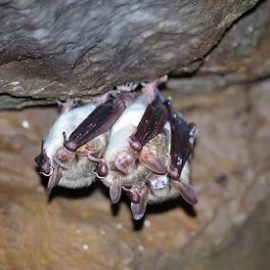
EUROBATS has set up a working group (so-called Intersessional Working Group, IWG) to deal with underground bat roosts (caves, mines, cellars, etc.) (IWG Conservation of Key Underground sites). The aim of this working group is currently to collect information on
Infliction points in species protection – current legislative changes versus scientific evidence in bat protection and the expansion of wind energy utilization
In memory of Bodo Stratmann
Participate in the Leisler’s Bat Project – Where do the Leisler’s spend the winter?
New Issue of Acta Chiropterologica published Vol. 25 (1)

Content: Karyotype Evolution in Vespertilionoidea: Centromere Repositioning and Inversions in Molossidae (Chiroptera, Mammalia)Marianne Volleth, Klaus-Gerhard Heller, Christopher Tidemann, Hoi-Sen Yong, Martin Göpfert, Stefan Müllerhttps://doi.org/10.3161/15081109ACC2023.25.1.001KEYWORDS: Cytotaxonomy, chromosomal evolution, bat phylogenetics Karyotype Comparison of Five African Vespertilionini Species with Comments on Phylogenetic
Wind farms in forests: a worrying story from France
New download area on the bat observatory page
Conference of the Bat Markers of the Bat Marking Central Dresden (FMZ) from 03. – 05.11.2023 at Mansfeld Castle (Saxony-Anhalt)
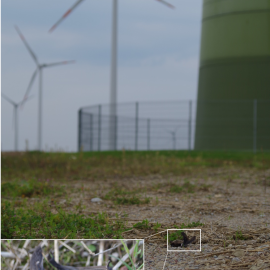
BatNet: a deep learning-based tool for automated bat species identification from camera trap images

Automated monitoring technologies can increase the efficiency of ecological data collection and support data-driven conservation. Camera traps coupled with infrared light barriers can be used to monitor temperate-zone bat assemblages at underground hibernacula, where thousands of individuals of multiple species